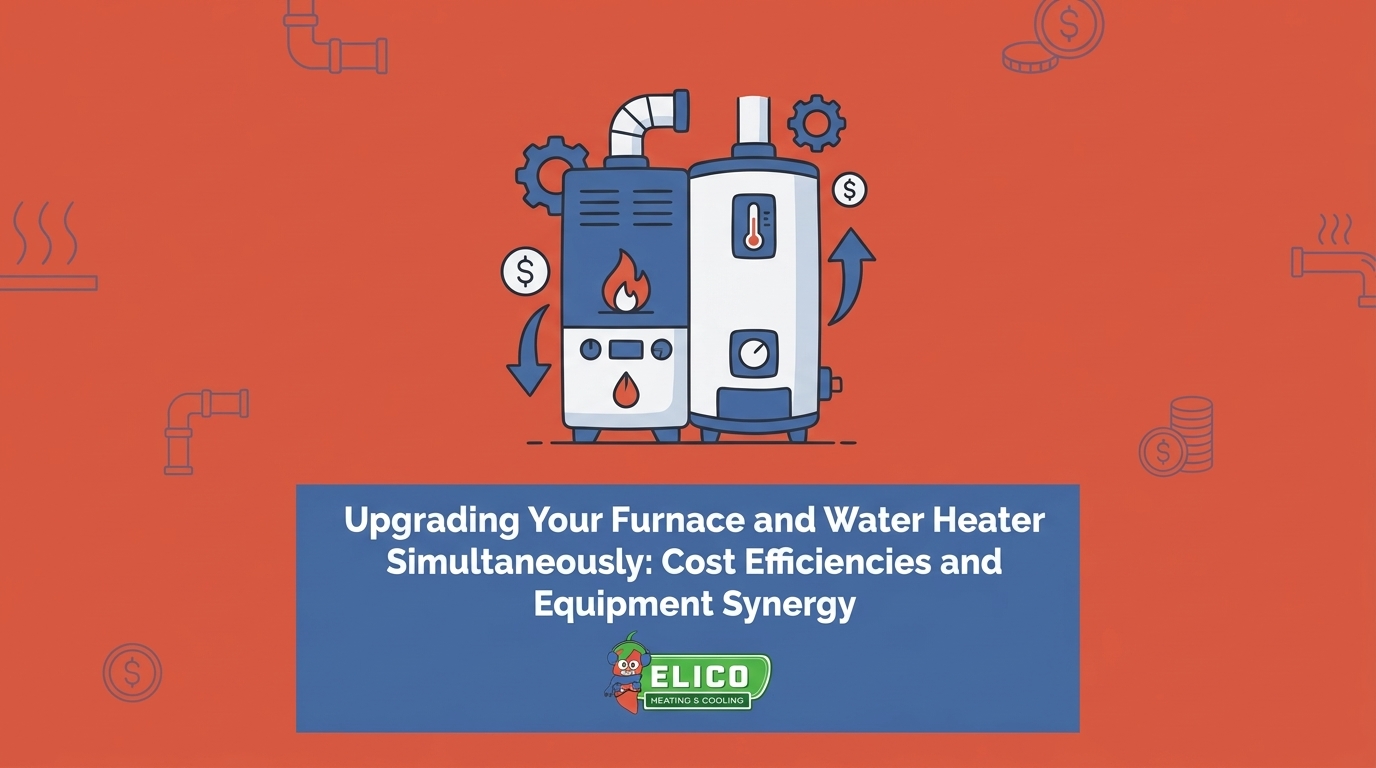
Upgrading Your Furnace and Water Heater Simultaneously: Cost Efficiencies and Equipment Synergy


Why Consider a Dual Upgrade Just Before Winter?
Are you heading into the cold season wondering if your aging heating equipment will actually survive another year? If you are weighing your options before freezing temperatures arrive, understanding the strategy behind Upgrading Your Furnace and Water Heater Simultaneously: Cost Efficiencies and Equipment Synergy is an essential first step. Many homeowners discover during their October pre-winter heating startup that both their furnace and water heater are showing significant signs of wear. Because these units are often installed at the same time when a house is built, they tend to reach the end of their functional lifespans together. This creates a challenging decision point: do you replace one unit now and hope the other holds on, or do you capitalize on the logistical advantages of replacing both at the same time?
If you need immediate assistance evaluating your home's current systems, we recommend exploring our heating services and learning more about professional furnace replacement to secure your comfort.
Staggering your replacements over multiple seasons might seem like a way to pace your home improvements, but it often leads to duplicated labor, mismatched equipment, and the constant worry of a sudden breakdown. Coordinating these replacements unlocks significant mechanical advantages that simply cannot be achieved when swapping out units one by one. By taking a comprehensive approach to your home's mechanical room, you can optimize your venting, streamline the installation process, and ensure your home is fully prepared for the heavy demands of the upcoming winter.
Mechanical Synergies: Shared Venting and High-Efficiency Upgrades
To fully grasp the benefits of a simultaneous upgrade, it helps to understand how your heating and hot water systems interact behind the scenes. In many Valparaiso homes, older standard-efficiency furnaces and traditional atmospheric water heaters share a common venting infrastructure. This usually involves a metal flue or a masonry chimney that carries the combustion exhaust gases safely out of your home. As long as both units are operating with similar drafting requirements, this shared system functions exactly as designed.
However, the industry has shifted heavily toward high-efficiency HVAC equipment. When you upgrade an older furnace to a modern, high-efficiency model, the new unit extracts so much heat from the combustion process that the exhaust gases are no longer hot enough to rise up a traditional chimney. Instead, these modern systems require dedicated PVC direct venting systems that exit through the side of your home. This mechanical transition creates a major synergy when planning a furnace installation alongside a water heater upgrade.
Synchronizing these mechanical upgrades provides several distinct advantages:
1. Optimized Venting Design: Installers can plan and route the new PVC venting for both high-efficiency units at the same time, ensuring the cleanest, least intrusive layout through your basement or utility room walls.
2. Improved Airflow Dynamics: Direct-vent systems pull fresh combustion air from outside rather than using the conditioned air inside your home, which stops cold drafts and improves overall heating efficiency.
3. Enhanced Safety: Removing the old atmospheric venting entirely eliminates the risk of backdrafting, where dangerous exhaust gases spill back into your living space.
Solving the Orphaned Water Heater Problem
One of the most critical mechanical reasons to replace both systems together is to prevent an "orphaned water heater." If you upgrade to a high-efficiency furnace but leave an older, standard-efficiency water heater in place, that water heater is left alone to vent into a chimney that is now far too large for its exhaust volume.
Without the intense heat of the older furnace to help establish a strong updraft, the water heater's cooler exhaust gases struggle to rise. This leads to condensation forming inside the chimney liner, which causes rapid corrosion and structural deterioration. Worse, a weak draft can cause carbon monoxide to spill back into your mechanical room. Upgrading both units simultaneously allows your technicians to abandon the old, oversized chimney entirely, ensuring safe, reliable venting for your new equipment.
Labor Efficiencies: Eliminating Redundant Staging and Cleanup
Beyond the technical mechanics, the operational benefits of a dual upgrade are substantial. Replacing heavy mechanical equipment is an invasive process. It requires protecting your floors, hauling away massive metal tanks, running new gas lines, and modifying ductwork. When you stagger your replacements, you are forcing your household to endure this disruption twice.
System Draining and Disconnection: Preparing a mechanical room for equipment removal takes time. Technicians must shut off the main gas supply, drain the water lines, and disconnect electrical circuits. When replacing both units, this entire preparation phase only happens once.
Gas Line Modification: Modern equipment often requires slight modifications to the existing gas piping to accommodate new valve locations or increased capacity requirements. A coordinated team can measure, cut, thread, and test the entire gas manifold for both the furnace and the water heater in a single, streamlined workflow.
Site Cleanup and Restoration: Hauling away old equipment, sweeping up debris, and removing floor runners is labor-intensive. Consolidating the job means your home is returned to normal immediately after the project is finished, rather than requiring a repeat performance a year later.
Because these tasks overlap so heavily, a highly trained team can typically execute this dual replacement within a standard 6-hour dual-installation window. This level of operational efficiency is a standard capability for experienced technicians. It minimizes the time you have to take off work, reduces the hours your home is without heat or hot water, and delivers a major quality-of-life benefit by resolving all your mechanical upgrades in a single morning or afternoon.
Comparing the Paths: Simultaneous Replacement vs. Staggered Timelines
When deciding how to manage aging equipment, seeing the long-term impacts side-by-side can clarify the best path forward. Homeowners often underestimate the compounding risks of leaving an older unit in place while upgrading its counterpart. If you complete your October pre-winter heating startup and find that both systems are struggling, delaying one replacement usually results in higher overall effort and increased vulnerability.
Matching the lifespans of your primary mechanical systems simplifies your future maintenance schedules. Instead of tracking different warranty expiration dates, scheduling separate annual tune-ups, and budgeting for staggered replacements a decade from now, your entire mechanical room operates on a single, predictable timeline. For more insights on the logistics of combining these projects, you can review the specific consolidating HVAC systems challenges that homeowners face when they try to piece together piecemeal upgrades.
• Home Disruption — Simultaneous Replacement: One single installation event; floors protected and cleaned once. — Staggered Timelines: Multiple days of disruption spread across different seasons or years.
• Venting Safety — Simultaneous Replacement: Complete transition to safe, dedicated direct-venting systems. — Staggered Timelines: High risk of leaving an orphaned water heater with poor drafting.
• Labor Efficiency — Simultaneous Replacement: Overlapping tasks (draining, gas lines) are completed concurrently. — Staggered Timelines: Redundant labor efforts; technicians must prep and test the site twice.
• Warranty Tracking — Simultaneous Replacement: Both units share the same installation date and maintenance schedule. — Staggered Timelines: Confusing, overlapping warranty periods and separate service visits.
• Breakdown Risk — Simultaneous Replacement: Guaranteed reliability for both heat and hot water before winter. — Staggered Timelines: The older, delayed unit remains a high risk for emergency failure.

Navigating Financial and Administrative Considerations
While the mechanical and operational benefits of a dual upgrade are clear, the administrative efficiencies are equally compelling. Upgrading major home appliances involves a significant amount of paperwork, municipal oversight, and long-term financial planning. Consolidating these efforts inherently maximizes the value of the installation service you receive.
Streamlined Municipal Permitting: Most local building codes require a permit and a subsequent safety inspection whenever a furnace or a water heater is replaced. If you stagger your installations, your contractor must pull two separate permits, and you must arrange your schedule to accommodate two separate municipal inspections. A simultaneous upgrade requires only a single permit and one inspection visit, saving both administrative time and hassle for everyone involved.
Maximizing Generic Incentives: Transitioning to high-efficiency heating and water heating equipment often qualifies homeowners for generic federal tax credits and utility rebates. Because these programs frequently undergo changes, upgrading both systems at once ensures you can capture the current available incentives for your entire mechanical room before program requirements shift. We always advise readers to consult directly with their local utility provider or a qualified tax professional to verify which generic incentives apply to their specific equipment choices.
Consolidated Labor Value: Because the installation team is already on-site, already has the gas and water lines shut down, and already has the venting pathways opened up, the labor required to install the second unit is significantly reduced compared to an independent visit. This efficiency means a greater portion of your investment goes directly toward high-quality equipment rather than redundant labor hours.
The Peace of Mind Factor: Beating the Midwest Freeze
When you live in a region that experiences harsh, freezing winters, the reliability of your heating and hot water systems is not just a matter of comfort—it is a matter of home safety. Valparaiso residents know that when the temperature plummets, a sudden equipment failure can quickly escalate into a household emergency. The risks associated with a mid-winter breakdown are severe, ranging from frozen, bursting plumbing pipes to the immediate discomfort of a freezing living space.
Preemptive action is always safer, more cost-effective, and less stressful than an emergency replacement. If your October pre-winter heating startup reveals that your furnace has a cracked heat exchanger or your water heater is showing severe rust and corrosion, waiting for the unit to fail completely is a dangerous gamble. Emergency replacements often happen on the coldest days of the year, when HVAC schedules are fully booked, potentially leaving you waiting in a cold house.
By opting for a simultaneous upgrade before the severe weather arrives, you guarantee uninterrupted heat and hot water during the most demanding months of the year. Having two brand-new, synergistic systems operating at peak efficiency provides absolute peace of mind. Instead of listening anxiously to every strange noise your aging equipment makes, you can secure your home's comfort early and actually enjoy the winter season. If you are ready to proactively protect your home, exploring your options for furnace replacement in Valparaiso is the smartest move you can make this fall.
Frequently Asked Questions About Dual Installations
Should I replace my water heater when I replace my furnace?
The short answer is yes, if both units are nearing the end of their lifespan, replacing them together is highly recommended. Because they share proximity, gas lines, and often venting infrastructure, a dual replacement eliminates duplicated labor. Upgrading both at once ensures you do not face another major installation disruption just a year or two down the road.
Do furnaces and water heaters share a vent?
In many older homes, standard-efficiency furnaces and water heaters do share a single masonry chimney or metal B-vent. However, modern high-efficiency furnaces use dedicated PVC pipes to vent directly outside. If you upgrade your furnace but leave an old water heater attached to the original shared chimney, it can cause severe drafting and condensation issues.
How long does a dual installation of a furnace and water heater take?
An experienced, coordinated team can typically complete a standard dual replacement within a 6-hour dual-installation window. Because the technicians can drain the systems, modify the gas lines, and prep the mechanical room for both units simultaneously, the overlapping labor drastically reduces the total time required compared to two separate installations.
Can I qualify for tax credits if I upgrade both systems at the same time?
Yes, generic federal tax credits and local utility rebates frequently apply to high-efficiency furnaces and modern water heaters. Upgrading both systems simultaneously allows you to process all your qualifying paperwork at once. You should always consult with a tax professional to understand exactly how current energy-efficiency incentives apply to your specific tax situation.
What are the risks of leaving an old water heater attached to a new furnace's venting system?
Leaving a standard water heater in a chimney that was previously shared with an older furnace creates an "orphaned water heater." Without the furnace's heat to help push exhaust gases upward, the water heater's exhaust can stall, leading to corrosive condensation inside the chimney and a high risk of dangerous carbon monoxide spilling back into your home.
Secure Your Home's Complete Comfort Ahead of the Cold
Replacing both your heating and hot water systems simultaneously is one of the most efficient, forward-thinking investments you can make in your home's infrastructure. By consolidating the labor, you eliminate the disruption of staging your home multiple times. By upgrading both units at once, you optimize your venting, prevent the dangers of an orphaned water heater, and ensure true equipment synergy. Having a clear, logical breakdown of these benefits makes it much easier to make an informed decision rather than waiting for an emergency breakdown.
As you prepare for the freezing months ahead, Upgrading Your Furnace and Water Heater Simultaneously: Cost Efficiencies and Equipment Synergy provides the ultimate peace of mind. Do not wait for your October pre-winter heating startup to turn into a mid-winter crisis. We encourage you to schedule a professional inspection to see if a dual upgrade is the right strategy for your home. Reach out today to discuss your furnace replacement options and secure your home's complete comfort before the cold weather hits.


HVAC Financing

Blogs
Upgrading Your Furnace and Water Heater Simultaneously: Cost Efficiencies and Equipment Synergy

Diagnosing Cold Spots in Your Schererville Home After Turning on the Furnace for the First Time