Challenges You Might Face When Consolidating HVAC Systems


Challenges You Might Face When Consolidating HVAC Systems: Understanding Integration Problems and Solutions
Consolidating HVAC systems can be a complex endeavor, often fraught with challenges that can impact system performance and efficiency. This article delves into the common issues faced during HVAC consolidation, providing insights into how to navigate these challenges effectively. Understanding the intricacies of HVAC system integration is crucial for ensuring optimal performance and longevity of your heating and cooling solutions. Many homeowners and businesses encounter difficulties such as equipment incompatibility, installation complexities, and cost implications. This guide will explore these challenges in detail, covering topics such as multi-zone systems, ductwork design, and the importance of refrigerant compatibility. By the end of this article, you will have a comprehensive understanding of the potential pitfalls and solutions associated with HVAC consolidation, enabling you to make informed decisions for a more efficient and reliable system.
What Are the Common HVAC System Integration Problems?
When consolidating HVAC systems, several integration problems can arise, primarily due to equipment incompatibility and the challenges of merging old and new systems. These issues can significantly affect system performance and efficiency, leading to increased energy costs and potential system failures. Understanding these common problems is essential for anyone considering HVAC consolidation, as proactive planning can mitigate many of these risks. Typical problems include mismatched capacities, differing control protocols, and physical installation constraints that can compromise the entire system's integrity.
How Do Incompatible HVAC Equipment Risks Affect System Performance?
Incompatible HVAC equipment can lead to significant performance degradation, as different systems may not communicate effectively or operate within optimal parameters. This lack of synergy can result in increased energy costs, often by 15-30%, due to inefficient operation and components working harder than necessary. For instance, if an older furnace with a single-stage compressor is paired with a modern, variable-speed air conditioning unit, the mismatch in technology can cause the system to short-cycle or operate at suboptimal loads, leading to higher utility bills and reduced comfort levels. Furthermore, mismatched components can accelerate wear and tear, potentially reducing the lifespan of both new and old equipment by several years.
What Issues Arise from Combining Old and New HVAC Systems?
Combining old and new HVAC systems often presents a myriad of compatibility and efficiency issues. Older systems, typically designed with less advanced technology and different refrigerants, may not be able to seamlessly integrate with newer, high-efficiency units. This can create a situation where the new system underperforms, as it is unable to operate at its optimal capacity due to the limitations of the older equipment. For example, an older ductwork system might not be adequately sized for a new, more powerful air handler, leading to restricted airflow and reduced efficiency. Additionally, the potential for system failure increases when components are not designed to work together seamlessly, often resulting in a 20-40% higher risk of breakdowns within the first few years post-consolidation compared to fully integrated new systems. This can translate into unexpected repair costs and prolonged downtime.
What Are the Drawbacks of Multi-Zone HVAC Systems in Consolidation?
Multi-zone HVAC systems offer flexibility and efficiency by allowing different areas of a building to be heated or cooled independently, but they come with their own set of challenges during consolidation. These systems can significantly increase installation complexity and may lead to uneven wear and airflow problems if not designed and implemented correctly. Understanding these drawbacks is crucial for effective HVAC consolidation, as improper setup can negate the benefits of zoning and lead to higher operational costs and reduced comfort.
How Does Multi-Zone HVAC Installation Increase Complexity?
The installation of multi-zone HVAC systems can be substantially more complex due to the need for precise zoning requirements and the integration of various components. Each zone typically requires its own thermostat, motorized dampers, and dedicated ductwork branches, which can complicate the design and installation process. This often involves running additional wiring for multiple thermostats and installing intricate damper systems within the ductwork. The labor and material costs associated with multi-zone systems can be 15-30% higher than traditional single-zone systems, making it essential to weigh the benefits of individualized comfort against the potential challenges and increased upfront investment. Furthermore, the calibration of these systems to ensure balanced airflow across all zones requires specialized expertise.
What Causes Uneven Wear and Airflow Problems in Multi-Zone Systems?
Uneven wear and airflow problems in multi-zone systems can primarily arise from improper duct sizing and installation, as well as inadequate damper calibration. If the ductwork is not meticulously designed to accommodate the specific heating and cooling loads of each zone, it can lead to imbalanced airflow. This means some areas might receive too much conditioned air, becoming over-conditioned, while others remain uncomfortable due to insufficient airflow. This imbalance not only affects comfort levels but can also lead to increased wear on the system's main components, such as the furnace or air conditioner, as they may cycle more frequently or run at higher capacities to compensate for the deficiencies in certain zones. This can reduce the system's lifespan by 10-20% and result in higher maintenance costs over time.
How Do Ductwork Design and Airflow Challenges Impact HVAC Consolidation?
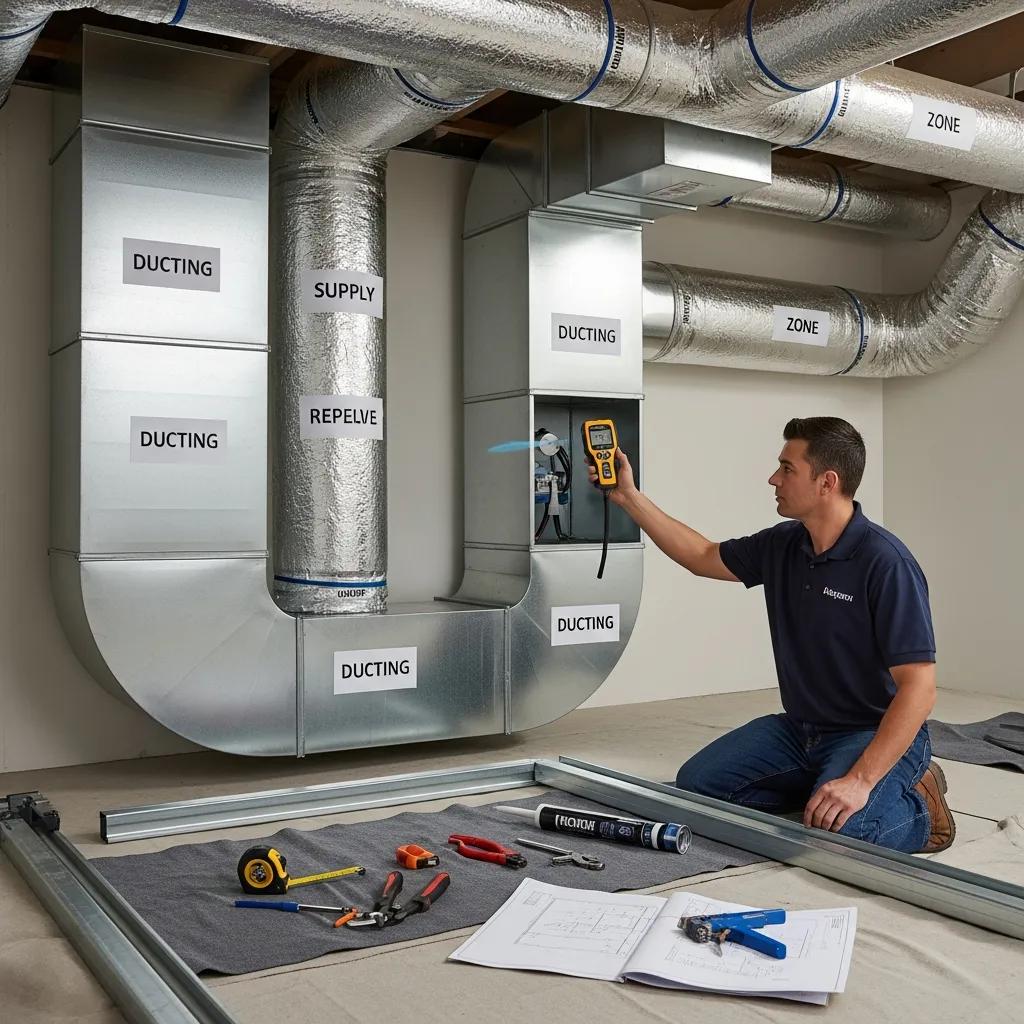
Ductwork design plays a critical role in the efficiency and effectiveness of any HVAC system, and its importance is amplified during consolidation. Poorly designed or maintained ductwork can lead to significant airflow challenges, impacting the overall performance of the consolidated system, regardless of how efficient the new equipment is. Understanding the importance of proper duct sizing, sealing, and the effects of leaks and blockages is essential for successful HVAC consolidation, as these factors directly influence energy consumption and indoor air quality.
What Are the Effects of Improper Duct Sizing on System Efficiency?
Improper duct sizing can lead to substantial efficiency loss, as air may not flow freely or at the correct velocity through the system. If ducts are too small, the system experiences increased static pressure, forcing the fan motor to work harder and consume more energy, potentially increasing electricity usage by 5-15%. Conversely, if ducts are too large, airflow velocity decreases, leading to poor air distribution and temperature stratification. Both scenarios result in the HVAC system working harder to maintain desired temperatures, leading to higher energy consumption and reduced comfort. Additionally, improperly sized ducts can create pressure imbalances, causing whistling noises, uneven heating or cooling throughout the space, and premature wear on the blower motor.
How Can Leaks and Blockages Complicate HVAC Integration?
Leaks and blockages in ductwork can significantly complicate HVAC integration by severely reducing system efficiency and increasing energy costs. Duct leaks, which are common in older systems, can allow up to 20-30% of conditioned air to escape into unconditioned spaces like attics or crawl spaces, effectively wasting a significant portion of the energy used to heat or cool the air. This directly translates to higher utility bills and reduced comfort. Blockages, caused by debris, collapsed sections, or even pests, restrict airflow, forcing the system to work harder to push air through, leading to increased energy consumption and potential overheating of components. Regular maintenance and inspection of ductwork, including professional sealing and cleaning, are essential to identify and address these issues promptly, ensuring the consolidated system operates at its peak efficiency.
HVAC Ductwork Flaws & Reconditioning Solutions
The diagnosis showed that the major problem was due to the poor performance of two supply ventilation ducts (leakages and pressure drops) called A & B, with impact on the fan blowing pressure and on pressure along ducts. Reconditioning measures were proposed by SNIA, including the near-full replacement of ventilation ductwork A and its Air Handling Unit (AHU - 2200 m3/h), the use of a duct sealing solution for ventilation ductwork B and the installation of a fan speed controller on its AHU (1900 m3/h).
Ductwork design flaws and poor airtightness: a case study about a ventilation system reconditioning in a sealed building, B Moujalled, 2018
What Are the Cost Implications and ROI Considerations for HVAC Consolidation?
When considering HVAC consolidation, it is crucial to thoroughly evaluate the cost implications and potential return on investment (ROI). Understanding the upfront costs compared to long-term savings can help homeowners and businesses make informed decisions about their HVAC systems. A comprehensive financial analysis should account for not only the initial purchase and installation but also potential operational savings, maintenance costs, and the lifespan of the new or integrated components.
How Do Upfront Investments Compare to Long-Term Savings?
Upfront investments in HVAC consolidation can be significant, ranging from a few thousand dollars for minor upgrades to tens of thousands for complete system overhauls or implementing multi-zone solutions. These costs cover new equipment, installation labor, ductwork modifications, and control system integration. However, these investments often lead to substantial long-term savings through reduced energy costs, improved system performance, and enhanced comfort. Modern, high-efficiency systems can reduce energy consumption by 20-50% compared to older models. A thorough cost-benefit analysis can help determine whether the initial investment, which might have a payback period of 3-7 years, is justified by the potential savings over the system's 15-20 year lifespan. Factors like local energy prices, climate, and the efficiency of the old system heavily influence the ROI.
What Unexpected Repair Costs Might Occur After Consolidation?
Unexpected repair costs can unfortunately arise after HVAC consolidation, particularly if older systems are retained and integrated with new components. These costs may include repairs to outdated components that are not fully compatible with newer technology, such as an older furnace struggling to keep up with a new, high-efficiency air conditioner. Common issues include premature failure of older compressors, control board malfunctions due to communication discrepancies, or increased wear on motors. It is essential to budget for potential repairs and maintenance, perhaps allocating an additional 10-15% of the project cost for contingencies, to ensure the longevity and efficiency of the consolidated system. A comprehensive warranty for new components and a detailed inspection of existing infrastructure can help mitigate some of these risks.
How Does Refrigerant Compatibility Affect Environmental and Regulatory Compliance?
Refrigerant compatibility is a critical factor in HVAC consolidation, as mixing different refrigerant types can lead to severe performance issues, system damage, and significant environmental and regulatory compliance problems. Understanding the challenges associated with refrigerant compatibility is essential for maintaining compliance, ensuring system efficiency, and protecting the environment. The choice of refrigerant directly impacts a system's Global Warming Potential (GWP) and its adherence to evolving environmental standards.
What Challenges Arise from Mixing Different Refrigerant Types?
Mixing different refrigerant types in the same system is strictly not recommended and can cause serious performance issues and irreversible damage. Refrigerants have distinct chemical properties and require specific lubricants; mixing them can lead to chemical reactions that form acids, sludge, or other contaminants. This contamination can cause compressor failure, clog expansion valves, and significantly reduce the system's overall efficiency by 30% or more. For example, mixing R-22 (an HCFC) with R-410A (an HFC) will lead to immediate system breakdown and costly repairs, often requiring a complete system flush and component replacement. Additionally, using incompatible refrigerants may violate environmental regulations, leading to substantial fines and other penalties from regulatory bodies like the EPA.
How Do Refrigerant Regulations Influence HVAC System Upgrades?
Refrigerant regulations play a significant role in HVAC system upgrades, as compliance with these regulations is essential for legal operation and environmental responsibility. The phase-out of ozone-depleting substances like R-22, mandated by international agreements such as the Montreal Protocol and domestic regulations like the EPA's Clean Air Act, means that older systems using R-22 are becoming increasingly expensive to maintain due to dwindling refrigerant supplies. Upgrading to systems that use environmentally friendly refrigerants, such as R-410A or newer low-global warming potential (GWP) refrigerants like R-32 or R-454B, can improve compliance and enhance system efficiency and performance. Staying informed about current regulations, such as those from the EPA and international agreements like the Kigali Amendment, which aims to phase down HFCs, is crucial for any HVAC consolidation project to avoid future obsolescence and ensure long-term operational viability.
How Can Smart Thermostat and HVAC System Integration Be Optimized?
Integrating smart thermostats with HVAC systems can significantly enhance energy efficiency, provide granular user control, and offer advanced diagnostic capabilities. However, compatibility issues between smart controls and older HVAC units can pose challenges that need careful consideration. Understanding how to optimize this integration is key to maximizing the benefits of smart technology, leading to a more responsive, efficient, and user-friendly consolidated HVAC system.
What Are the Compatibility Issues Between Smart Controls and Older HVAC Units?
Compatibility issues can frequently arise when integrating smart thermostats with older HVAC units, as these systems may not support the advanced features or wiring requirements of modern smart technology. For example, many older systems lack a common wire (C-wire), which is essential for providing continuous power to most smart thermostats. Without it, the thermostat may rely on battery power or "power stealing," leading to intermittent operation or system malfunctions. Older systems may also lack the necessary communication protocols (e.g., multi-stage heating/cooling signals) to fully utilize smart thermostat functions like precise temperature control, humidity management, or advanced scheduling. This can limit the effectiveness of energy-saving features and reduce overall system efficiency. It is essential to assess the existing wiring and system capabilities before implementing smart controls to ensure optimal performance and avoid costly modifications.
How Do Control Systems Enhance Energy Efficiency in Consolidated HVAC?
Control systems, including smart thermostats and building management systems (BMS), can significantly enhance energy efficiency in consolidated HVAC systems by providing precise control and automation. By allowing for detailed temperature control, occupancy-based scheduling, and remote access, these systems can reduce energy consumption by 10-15% or even more in commercial settings. Smart thermostats learn user preferences and adapt to optimize heating and cooling cycles, while advanced BMS can integrate with other building systems (lighting, ventilation) to create a holistic energy management strategy. Implementing smart technology enables zone control, preventing the conditioning of unoccupied areas, and provides valuable data on energy usage, allowing for continuous optimization and substantial savings on energy bills while maintaining optimal system performance and occupant comfort.
This holistic view underscores the importance of considering the entire building-HVAC system interaction, not just individual components, for optimal energy performance.
Integrated Building-HVAC System Interaction Analysis
building energy analysis without sufficient consideration of the system loads, their variability, and the interactions between the building shell, the HVAC system and the control system.
A methodology for integrated building—
HVAC system thermal analysis, AK Athienitis, 1993
Conclusion
Successfully consolidating HVAC systems can lead to enhanced efficiency, reduced energy costs, and improved comfort levels in your space. By understanding the integration challenges and addressing them proactively, you can ensure a seamless transition to a more effective heating and cooling solution. Take the next step towards optimizing your HVAC system by exploring our expert resources and services. Invest in your comfort and efficiency today for a more sustainable tomorrow.



HVAC Financing

Blogs

How We Minimize Downtime During Emergency Commercial HVAC Repairs in Crown Point

Upgrading Your Furnace and Water Heater Simultaneously: Cost Efficiencies and Equipment Synergy

Diagnosing Cold Spots in Your Schererville Home After Turning on the Furnace for the First Time